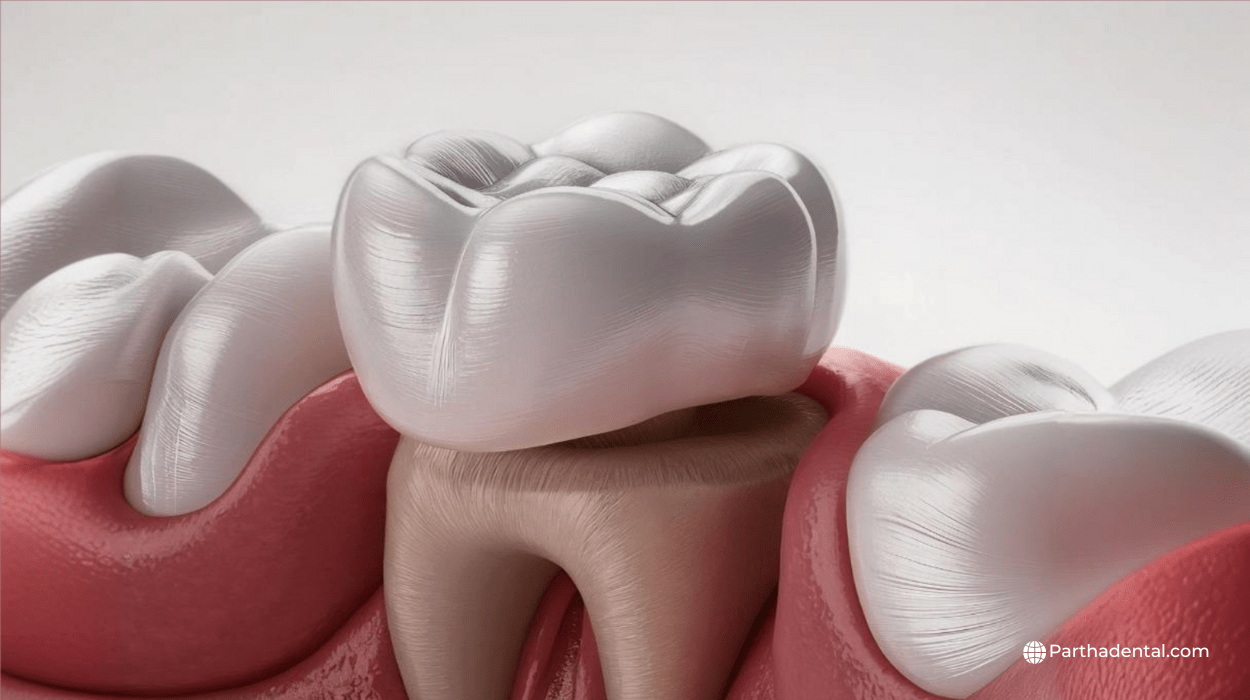
Dental Crown
A dental crown is a cap that is placed over a damaged or decayed tooth. It covers the tooth completely, restoring its shape, size, and strength. Crowns can be made from different materials like metal, porcelain, or ceramic. They are used to protect weak teeth, hold dental bridges in place, cover dental implants, or improve the appearance of a tooth. Getting a crown usually involves two visits to the dentist. First, the dentist prepares the tooth and takes an impression. The crown is placed and adjusted to fit perfectly on the second visit. Crowns help in making teeth look and function better.
When are Dental Crowns Needed?
Dental crowns are needed when a tooth is badly damaged or decayed. They are used to protect weak teeth from breaking, restore broken teeth, or support teeth with large fillings. Crowns are also used to cover and protect teeth after a root canal treatment. If a tooth is very discoloured or misshapen, a crown can make it look better. Crowns are also placed on dental implants to replace missing teeth. Overall, dental crowns help in making damaged teeth stronger and look nicer.
Types of Dental Crowns
-
Metal Crowns: These crowns are known for their strength and durability. They are
resistant to wear and can withstand heavy chewing forces. Metal crowns are often used for molars
because they are not as visible and can handle the pressure of biting and grinding. They also
require the least amount of tooth structure to be removed compared to other types.
-
Porcelain-Fused-to-Metal Crowns: These crowns combine the strength of metal with
the natural appearance of porcelain. The metal base provides durability, while the porcelain outer
layer matches the color of your natural teeth. They are a popular choice for both front and back
teeth, offering a good balance of strength and aesthetics.
-
All-Porcelain Crowns: Made entirely from porcelain or ceramic, these crowns offer
the best natural look and are highly aesthetic. They are a good choice for front teeth where
appearance is important. While they are not as strong as metal crowns, advances in ceramic materials
have made them more durable.
-
All-Resin Crowns: These crowns are made from a plastic material and are often used
as a temporary solution while a permanent crown is being made. They are less expensive than other
types but are not as durable and may wear down faster. They are suitable for short-term use or for
patients who need a temporary crown.
-
Zirconia Crowns: Zirconia crowns are made from a type of ceramic known for its
strength and durability. They are often used in place of metal crowns and offer both good strength
and a natural appearance. They are suitable for both front and back teeth and can be a great option
for those looking for a balance between durability and aesthetics.
Procedure for Getting a Dental Crown
-
Initial Visit: First, the dentist examines your tooth and takes X-rays to check
the root and surrounding bone. If needed, the dentist will prepare the tooth by removing any decay
or damage.
-
Tooth Preparation: The dentist will shape your tooth to fit the crown. This might
involve filing down the tooth to make room for the crown. If the tooth is severely damaged, a
build-up material may be added to create a solid base for the crown.
-
Impression: Next, the dentist takes an impression of your tooth. This impression is
used to create a custom crown that fits perfectly. If needed, a temporary crown will be placed to
protect the prepared tooth while you wait for the permanent one.
-
Crown Placement: When the permanent crown is ready, you return to the dentist. The
temporary crown is removed, and the dentist checks the fit of the new crown. If it fits well, it is
cemented onto your tooth.
-
Final Adjustments: After the crown is in place, the dentist will make any final
adjustments to ensure it feels comfortable and aligns correctly with your bite.
Care for Dental Crowns
-
Brush Regularly: Brush your teeth twice a day with a soft toothbrush and fluoride
toothpaste. This helps remove plaque and keeps your crown clean.
-
Floss Daily: Floss between your teeth and around the crown to remove food particles
and plaque that a toothbrush might miss.
-
Avoid Hard Foods: Don’t bite into hard foods like ice or hard candy, as they can
damage your crown.
-
Wear a Mouthguard: If you grind your teeth or play sports, use a mouthguard to
protect your crown from damage.
-
Visit Your Dentist: Regular check-ups with your dentist are important to ensure
your crown is in good shape and to catch any problems early.
Why Choose Partha Dental Clinic for Dental Crowns
Choosing Partha Dental Clinic for your dental crown needs means you’re getting high-quality care from
experienced professionals. Our skilled dentists use the latest technology and materials to create crowns that
fit perfectly and look natural. We focus on making your experience comfortable and stress-free, with
personalized attention to your needs. At Partha Dental Clinic, we ensure that your dental crown not only
improves your smile but also lasts long. Trust us to provide expert care and excellent results for your dental
crown treatment.
Meet Our Doctors
Head of Nephrologist Department
Head of Orthopedist Department
Head of Cardiology Department
Book Appointment
Required fields are marked *