What to Expect When Visiting Our Dental Clinic. Learn More

banner img

Periodontal Diseases & Flap

  • Home
  • Periodontal Diseases & Flap

Get Directions

image

Periodontal Diseases & Flap

Periodontal disease, also known as gum disease, is a common condition that affects the tissues surrounding the teeth. It begins with inflammation of the gums (gingivitis) and can progress to affect the bone that supports the teeth (periodontitis). If left untreated, periodontal disease can lead to tooth loss. A periodontal flap procedure is a surgical treatment used to address advanced cases of periodontal disease. During this procedure, the dentist or periodontist makes an incision in the gum tissue to create a flap, allowing them to access and clean the deeper areas of the periodontal pockets. This helps remove bacteria and damaged tissue, and the flap is sutured back into place.

Why It is Needed?

  • Advanced Gum Disease: When gum disease has progressed beyond the point where non-surgical treatments are effective.
  • Deep Pockets: To clean deep pockets around the teeth that are difficult to reach with regular brushing and flossing.
  • Tooth Stability: To restore the health of the gum and bone to help stabilize the teeth.
  • Prevent Tooth Loss: To prevent further damage to the supporting structures of the teeth and reduce the risk of tooth loss.
  • Improved Oral Health: To enhance overall oral hygiene and prevent future complications related to gum disease.

Procedure

  • Examination: The dentist performs a thorough examination and may take X-rays to assess the extent of the periodontal disease and bone loss.
  • Anesthesia: Local anesthesia is administered to numb the affected area and ensure the patient is comfortable.
  • Incision: The dentist makes an incision in the gum tissue to create a flap, exposing the underlying bone and periodontal pockets.
  • Cleaning: The dentist cleans the exposed tooth roots and removes bacteria and damaged tissue from the pockets.
  • Reshaping: The bone may be reshaped to eliminate pockets and promote better gum reattachment.
  • Suturing: The gum flap is repositioned and sutured back into place to promote healing.
  • Post-Procedure Care: Instructions are given for post-operative care, including oral hygiene practices and follow-up visits.

Benefits

  • Enhanced Cleaning: Allows for thorough cleaning of deep periodontal pockets that cannot be reached with non-surgical methods.
  • Reduced Inflammation: Helps reduce gum inflammation and infection.
  • Restored Gum Health: Promotes healing of the gums and improves overall oral health.
  • Prevent Further Damage: Prevents progression of periodontal disease and protects the underlying bone and teeth.
  • Improved Aesthetics: Can improve the appearance of the gums and smile by reducing gum recession and promoting a healthier look.

Why Choose Partha Dental for Periodontal Disease & Flap?

At Partha Dental, we are committed to providing comprehensive care for patients with periodontal disease. Our experienced team of dental professionals uses advanced techniques and state-of-the-art technology to ensure the best outcomes for our patients. We offer personalized treatment plans tailored to each individual’s needs, ensuring that you receive the highest quality care in a comfortable and supportive environment. Our focus on patient education and preventive care means that we not only address the current issues but also help you maintain long-term oral health. Choosing Partha Dental means choosing a partner in your journey to healthier gums and a brighter smile.

Book Appointment

Required fields are marked *

    Get Directions

    image

    Periodontal Diseases & Flap

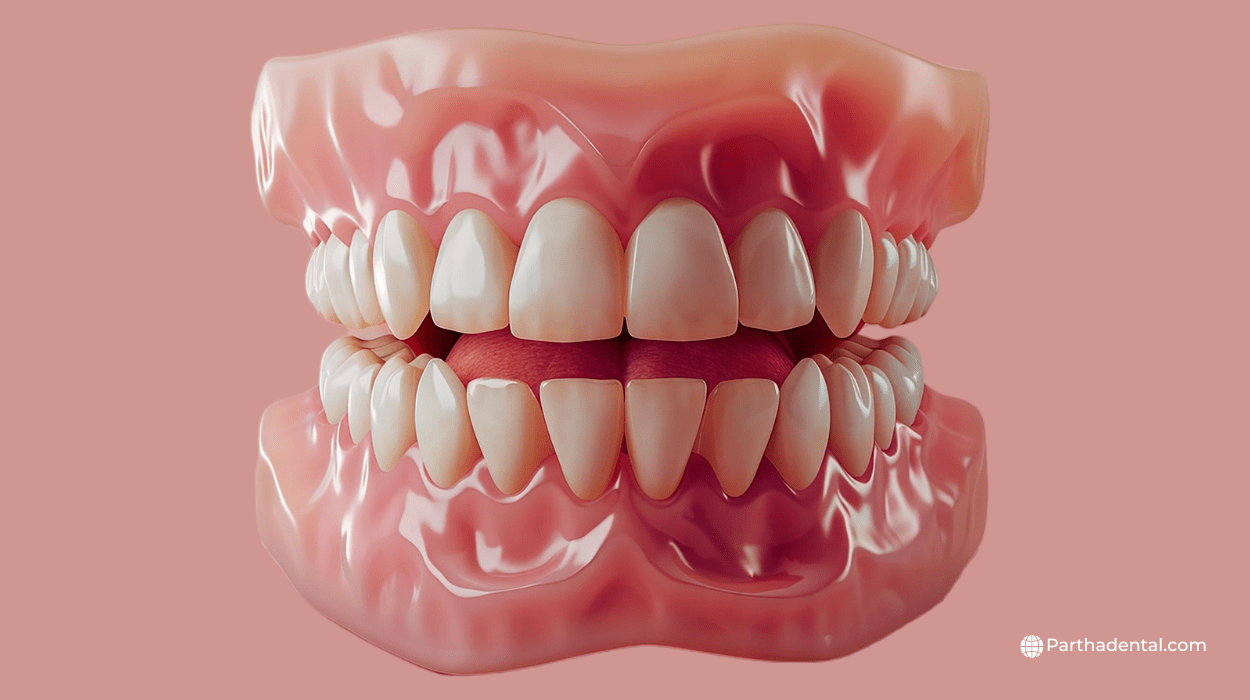
    Dentures are artificial teeth and gums that are made to replace lost or removed natural teeth. They are custom-made to fit a person’s mouth and help with eating, speaking, and smiling. Dentures can replace all teeth (called full dentures) or just a few missing ones (called partial dentures). They can be taken out and put back in as needed, and while they may take some time to get used to, they are an important option for those who have lost their teeth.

    When Are Hybrid Dentures Needed?

    Dentures are needed when someone has lost most or all of their teeth. This can happen due to age, gum disease, tooth decay, or injury. When teeth are missing, it can be hard to eat and speak properly, and it may also affect a person’s appearance and confidence. Dentures help replace the missing teeth, making it easier to chew food, talk clearly, and maintain the shape of the face. They provide a solution for people who no longer have their natural teeth.

    Types of Dentures

    • Full Dentures: Used when all teeth are missing in the upper or lower jaw.
    • Partial Dentures: Used when some natural teeth remain. They fill in the gaps where teeth are missing.
    • Immediate Dentures: These are placed right after teeth removal, so you don’t have to be without teeth while waiting for your permanent dentures.
    • Overdentures: These fit over a few remaining natural teeth or dental implants.

    Steps for Getting Dentures

    • Consultation: Visit your dentist to discuss your dental needs and determine if dentures are the right option for you. The dentist will examine your mouth and teeth.
    • X-Rays and Exams: The dentist may take X-rays or perform other exams to assess the condition of your gums, jawbone, and any remaining teeth.
    • Impressions: DThe dentist will take precise measurements and impressions of your mouth to create a model for the dentures. This ensures a custom fit.
    • Model Creation: A model or mold of your dentures is created. You will try this model to check the fit, comfort, and appearance. Any adjustments needed will be noted.
    • Tooth Extraction (if needed): If you have any teeth that need to be removed, the dentist will perform extractions before fitting the dentures.
    • Healing Period: If extractions were done, you may need to wait for your gums to heal before getting the final dentures. Temporary dentures might be provided during this time.
    • Try-In: You will try the model of your dentures in your mouth. This step allows for checking the fit, bite, and how they look when you smile. Adjustments are made if necessary.
    • Final Dentures: The final set of dentures is made based on the adjusted model. These are then fitted in your mouth to ensure they are comfortable and functional.
    • Follow-Up Visits: After receiving your dentures, you’ll return for follow-up visits to make any adjustments and ensure the dentures are fitting well over time.

    Benefits of Dentures

    • Improved Eating: Dentures help you chew food more effectively, making it easier to enjoy a variety of foods.
    • Better Speaking: They improve your ability to speak clearly, which can help with confidence in conversations.
    • Enhanced Appearance: Dentures restore the natural look of your smile, helping you feel more comfortable and confident.
    • Support for Facial Structure: They help support the shape of your face, preventing sagging and maintaining a more youthful appearance.
    • Easy to Remove and Clean: Dentures can be easily taken out for cleaning, making it simple to maintain oral hygiene.

    Why Choose Partha Dental Clinic for Dentures?

    Partha Dental Clinic is a great choice for getting dentures because we offer high-quality care and personalized service. Our experienced team uses the latest technology to create comfortable and well-fitting dentures that look natural. We take the time to understand your needs and ensure that the dentures match your smile perfectly. At Partha Dental Clinic, we are dedicated to making sure you feel confident and happy with your new dentures, and we provide ongoing support to help you adjust to them smoothly.

    Book Appointment

    Required fields are marked *